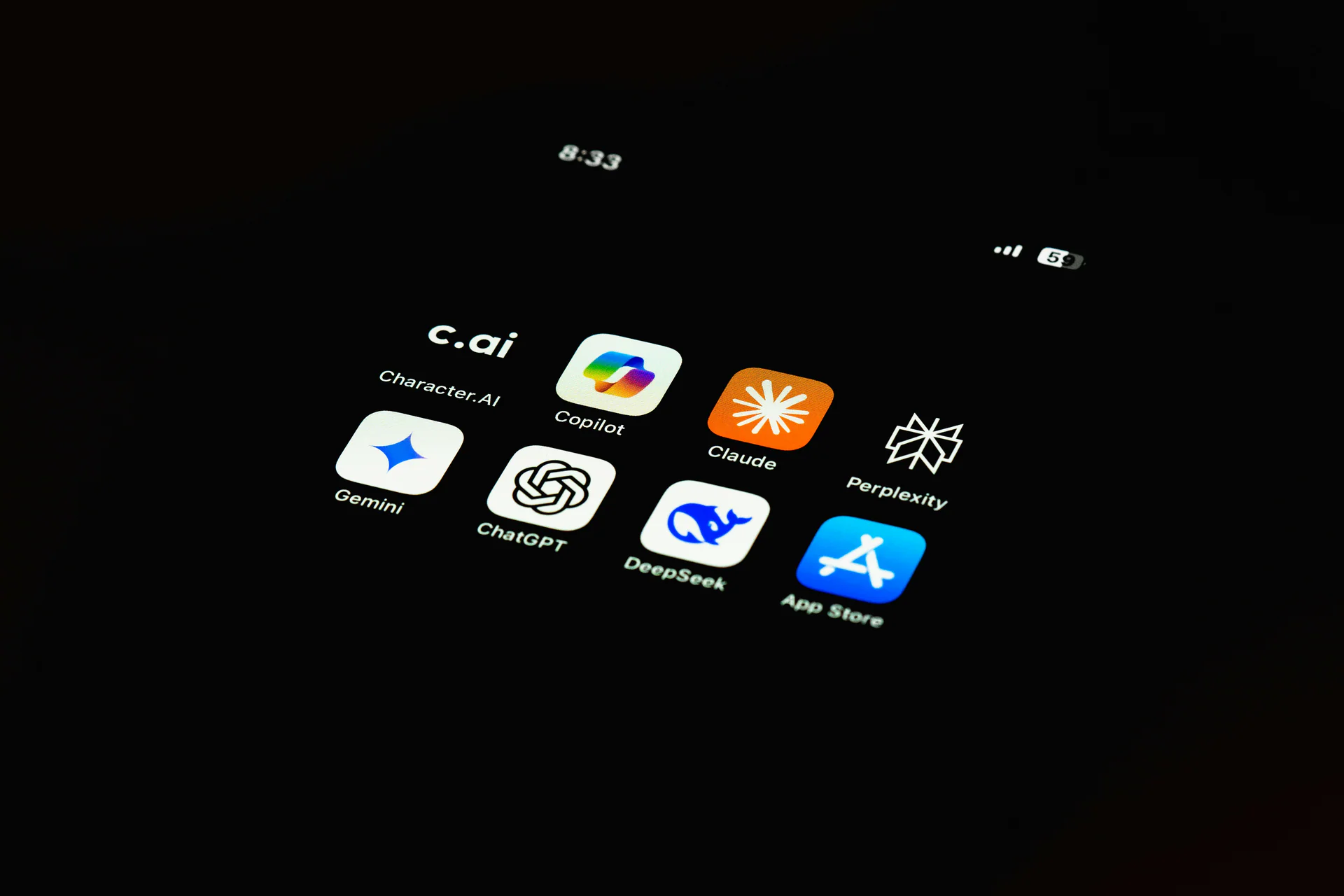
AI in design probably won't stay this cheap forever. A lot of the value people get today comes from companies spending hard on compute and giving users more than the economics likely support long term. If prices climb, designers and founders who depend on AI for every step will feel it first.
Cheap AI has changed habits fast. People now expect instant mockups, quick copy, image generation, code suggestions, and endless retries. That feels normal because the cost is hidden behind subsidized plans, investor money, and a race for market share.
That race won't last forever.
If you're watching ai, stocks, and chip supply, the pattern is easy to see. Training and running large models costs a lot. Chips are expensive. Access to them is political as well as commercial. Demand keeps climbing. If providers are operating at a loss now, they have three obvious moves later: raise prices, tighten limits, or reserve the best features for higher tiers.
For design teams, that changes the math.
Will AI in design stay cheap?
We wouldn't bet on it.
Some tools may stay low-cost at the entry level, but the good stuff is where pricing pressure usually shows up first. Longer context, faster output, stronger image generation, better reasoning, team seats, and heavier usage are the parts most likely to get more expensive.
That matters because many designers aren't using ai as a small assistant anymore. It's becoming part of the core workflow. Moodboards, wireframes, naming, UI copy, landing page structure, icon ideas, code generation, even user flow thinking. Once a tool sits in the middle of all that, a price jump stops being annoying and starts becoming operational.
This is where the future of ai gets less abstract. Affordability shapes behavior. If generation stays cheap, people generate more. If it gets expensive, people become selective again. Fewer retries. Better briefs. More reuse. More human judgment earlier.
That's not a bad thing.
What happens to designers who rely on AI too much?
The short answer is they get exposed.
If your main skill is prompting a model until it gives you a decent screen, you're depending on someone else's cost structure. The moment the monthly plan doubles, rate limits kick in, or the best model moves behind a bigger paywall, your speed drops.
The bigger problem isn't price. It's fragility.
A designer who knows spacing, type scale, hierarchy, onboarding flows, tables, filters, empty states, and conversion paths can still work when AI is limited. A designer who mostly asks for "make this cleaner" or "redo this in the style of X" has a harder time when the tool is slower, worse, or out of budget.
We'd treat AI like a strong intern. Fast. Useful. Sometimes surprisingly good. Still not the person you want making every decision.
That goes for "claude design" style workflows too, where people use a general AI model as a design partner. It can help with structure, UX writing, feature grouping, and quick critique. We'd use it for that. We wouldn't hand it the whole product.
How do you adapt if AI prices rise?
Build a workflow that works with less generation.
The safest setup is simple: start from proven UI, then use AI in short bursts where it saves real time. That means using templates, references, and reusable patterns first, then asking AI for copy options, edge cases, naming, summaries, or implementation help.
This is one reason we still back UI templates hard. If you've already got the main screens, AI becomes optional instead of foundational.
Say you're shipping a dashboard. Starting from Krona gives you a real HR product shape in React, Next.js, Tailwind CSS, TypeScript, and Framer Motion. Or if you need a SaaS and commerce mix, Natasha gives you that setup with shadcn/ui, React, Next.js, Radix UI, TypeScript, and Tailwind CSS. In both cases, you're editing a concrete product UI, not asking a model to invent one from scratch every morning.
Same idea for marketing sites. If AI copy and layout tools get pricier, starting from Geneva or browsing our Landing Pages collection gives you a base you can ship from while using AI only where it earns its cost.
Which approach is best for founders and small teams?
If we had to pick one, we'd choose this stack:
- Start from a template.
- Use AI for drafts, not final judgment.
- Pay humans for decisions that affect product direction.
That's the middle path, and it's the one least likely to break when pricing changes.
We wouldn't build a company around the assumption that today's AI costs are stable. That's too risky. If your product pipeline depends on generating twenty homepage versions, fifty ad concepts, and a full app flow every week, you should expect that to get more expensive or more constrained.
For founders, hiring someone is still worth it when the work needs taste, product thinking, and tradeoffs. AI can output a hero section. It won't own the consequences of a confusing pricing page, a weak onboarding flow, or a dashboard that hides the only number your customer cares about.
For developers, the practical move is even clearer. Keep a library of starting points so you don't need AI for the first 70 percent. Our dashboards, apps, and websites collections help there because you're beginning with real UI instead of a blank prompt.
For designers, we'd say this bluntly: keep learning the craft. Learn why a page works. Learn why one card layout scans faster than another. Learn why one onboarding step should be removed instead of rewritten. If AI stays cheap, those skills make you faster. If AI gets expensive, those skills keep you employed.
You can browse all our starting points at Mesbah Lab.